
From Amman to Yemen: Building Local Microbiology Capacity with Antibiogo
Drawing on years of MSF experience tackling antimicrobial resistance in conflict-affected settings across the Middle East, a Training of Trainers approach is helping bring Antibiogo - and the knowledge to use it - to public laboratories in Yemen.
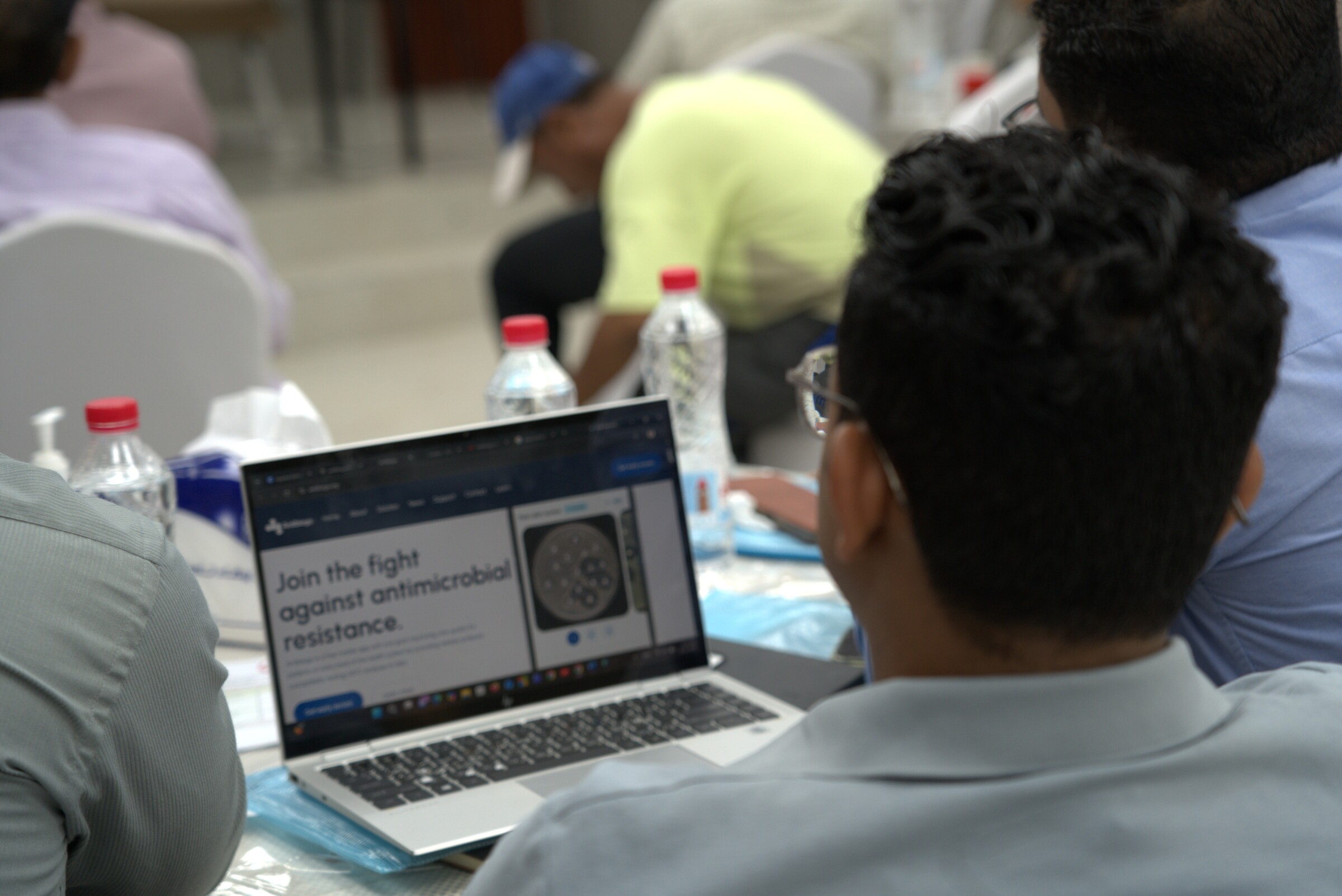
Tackling antimicrobial resistance in conflict-affected settings
Across the Middle East, conflict and disrupted health systems create particularly challenging conditions for tackling antimicrobial resistance (AMR).
At MSF's reconstructive surgery hospital in Amman, Jordan, which receives patients from Syria, Iraq, Yemen and other countries in the region, more than half of patients arrive with an infection caused by at least one multidrug-resistant bacterium. Many have undergone multiple surgical procedures and received several courses of antibiotics before reaching MSF, making their infections particularly difficult to treat.
Over the years, this experience has helped MSF develop expertise in managing AMR in conflict-affected settings, combining infection prevention and control, microbiology and surveillance, and antimicrobial stewardship. It now informs MSF's work in other trauma projects across the region, including Yemen and Gaza. It has also highlighted a key challenge: access to antibiotics alone is not enough. Laboratories need the capacity to identify the bacteria causing an infection and determine which antibiotics are likely to be effective.
Bringing microbiology expertise closer to laboratories
It was partly in response to these operational challenges that MSF developed Antibiogo, a free, offline smartphone application designed to support laboratory professionals in performing and interpreting antimicrobial susceptibility tests (AST), particularly where specialist microbiology expertise may be limited.
In Yemen, the recently established national AMR program, supported by WHO, is strengthening laboratory personnel’s skills in detecting antimicrobial resistance mechanisms, using WHONET and submitting data to GLASS.
Omar Alnagda, a laboratory manager who regularly serves as a trainer in the program’s workshops, suggested including training on Antibiogo. The Antibiogo team chose a Training of Trainers approach, with the aim of building local expertise that could then be shared with other laboratory professionals.
In July 2026, Omar and Emad Saif, Microbiology Laboratory Manager with MSF in Yemen, travelled to Amman for the first stage of this process.
“The Training of Trainers aims to prepare and equip trainers to deliver comprehensive training on the use of the Antibiogo application and its integration into the routine daily workflow of laboratories, for participants from 14 laboratories in Yemen,” explains Mai Al Asmar, Clinical Activity Manager for the Antibiogo Project.
From Amman to laboratories in Yemen
For Omar, who helped organize the training, the ability to pass it on was central: “The importance of this training is to share what we have learned with our colleagues in Yemen across the 14 laboratories. It will facilitate the use of the application to produce high-quality antimicrobial susceptibility testing reports, making it easier to provide better and more effective treatment for patients.”
A few days later, the next stage took place in Aden, where laboratory professionals came together for practical training as part of Yemen's National AMR One Health Program.
The training covered the different stages of using Antibiogo, from capturing images of AST plates and measuring inhibition zones to interpreting and validating results.
For Emad, Antibiogo is particularly relevant in a context where access to specialist expertise and more advanced technologies can be difficult. As he explains: “Antibiogo is an independent application that runs on smartphones. It was designed by Médecins Sans Frontières to help develop the skills of staff working in microbiology laboratories, and it is intended for low-income countries.”

By supporting laboratory professionals in reading and interpreting AST results according to international guidelines, Antibiogo can help improve the consistency of laboratory reporting and provide clinicians with information to guide antibiotic treatment decisions. “This application helps microbiology laboratory technicians produce accurate results and supports them in interpreting these results. It also helps provide early alerts for antimicrobial resistance and supports the timely selection of appropriate treatment for patients,” Emad explains.
Beyond individual patients, good-quality and consistent laboratory results can also contribute to AMR surveillance. In Yemen, Antibiogo is being introduced in support of public laboratories and the country's national AMR program.
Building capacity beyond a single training
The journey from Amman to Yemen illustrates a broader ambition behind Antibiogo: combining an accessible diagnostic tool with training and local knowledge transfer to strengthen microbiology capacity over time.
Following the training, participants are expected to share their knowledge with colleagues in their respective laboratories, supported by ongoing follow-up from the Antibiogo team. This approach aims to embed the use of the application into routine laboratory workflows and extend the benefits of the training beyond the initial group of participants.
For Emad, this is one of the most promising aspects of the project: “I believe that using Antibiogo in Yemen, particularly in Ministry of Public Health laboratories, will provide a strong boost to the transfer of knowledge and skills in a smart and simple way, in a country facing challenges and with limited resources to introduce modern technologies.”
The Amman training was therefore only the beginning: from MSF's experience of AMR in the region to Yemeni trainers, from trainers to laboratory professionals, and ultimately from stronger laboratory capacity to better information for patient care and AMR surveillance.
Regulatory information
Device: Antibiogo
Manufacturer: Fondation Médecins Sans Frontières, 34 avenue Jean Jaurès, 75019 Paris, France
Intended purpose: Antibiogo is a stand-alone mobile device software application used in conjunction with a microbiological culture method, intended to aid in the qualitative interpretation of antimicrobial resistance based on EUCAST and CLSI guideline recommendations. Antibiogo is an aid to diagnosis, performing automated interpretation of antimicrobial susceptibility testing using disc diffusion, complemented by minimum inhibitory concentrations (MICs) when available.
Antibiogo is a CE-marked in vitro diagnostic medical device under European Directive 98/79/EC, within the transitional provisions of the European In Vitro Diagnostic Medical Devices Regulation (IVDR).
Before use, carefully read the instructions for use corresponding to the version of Antibiogo being used. Consult the instructions for use.


